
Philosophy · Axiologic Research Editions
Holding the Dirty Thing by the Clean Side
A History of Strategies for Social Success and a Search for Theoretical Legitimacy
Follow the burden whenever power presents a polished justification. Who pays, who benefits, who may object, and who can leave? From sacrifice and empire to performance metrics, emotional resilience, algorithms, and decentralized brands, the book equips you to distinguish necessary coordination from expertly laundered domination.
The moral glove
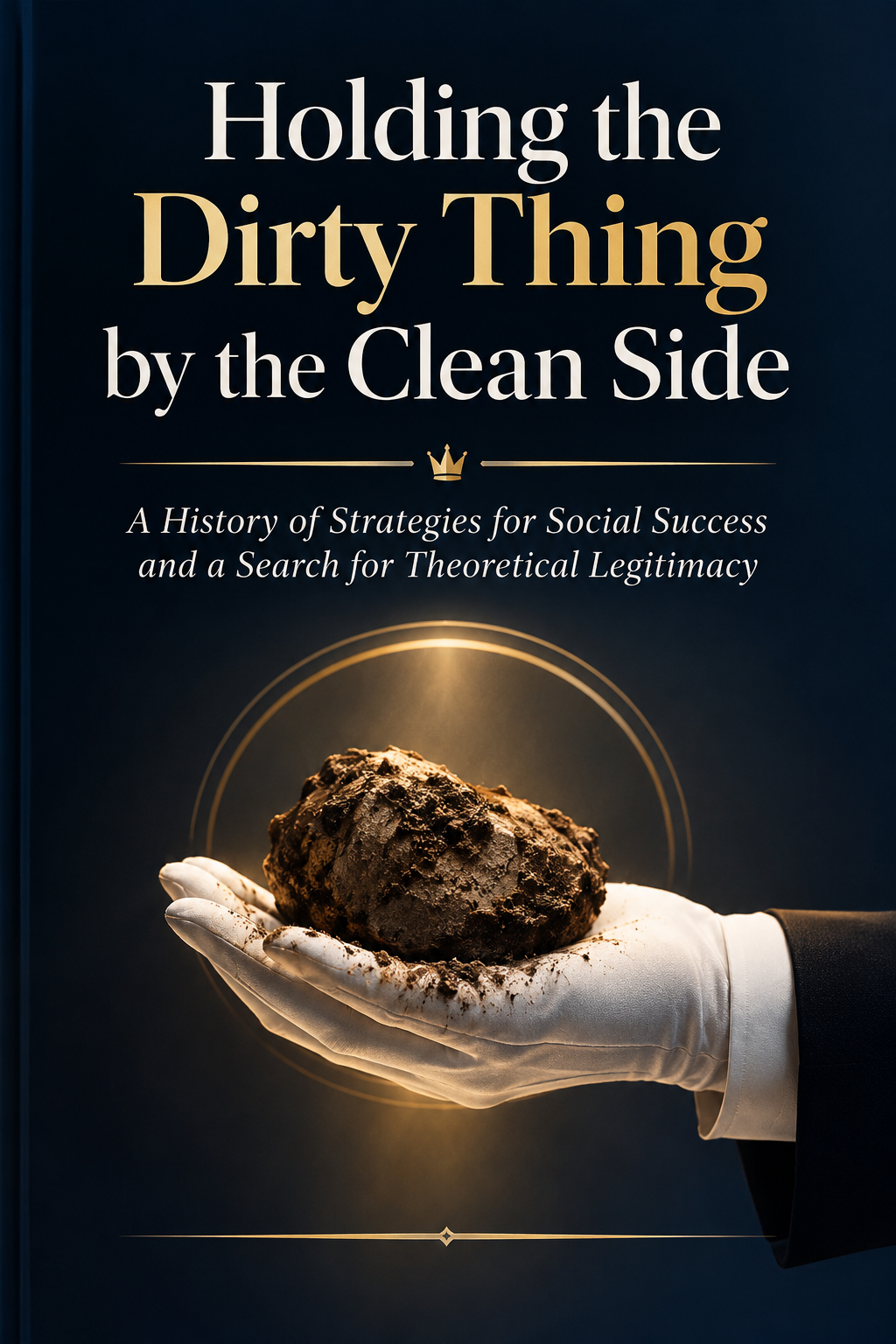
The clean-side rule names a recurring social operation. A cost is carried by somebody, but its painful materiality is covered by a vocabulary of duty, order, opportunity, virtue, procedure or progress. The book does not claim that religion, law, markets, hierarchy, expertise or technology are frauds. Each has coordinated real goods. Its harder question is whether useful arrangements become “moral gloves”: devices through which power can touch an injury without admitting contact.
That framing gives the book an unusually wide field. It tracks legitimacy through altar, throne, empire, office, market, family and machine; then it follows the psychology that makes burden-shifting attractive to elites and ordinary people alike. Empathy, envy, fear, altruism, status and rivalry are treated neither as saints nor demons, but as forces which institutions can organise badly or well. The result is a social diagnosis rather than a slogan against power.
Where the glove slips
How can a legitimate institution still conceal harm? By making the decision distant from the person who bears its cost. A procedure can be necessary and still make responsibility disappear; the book asks readers to inspect the route of burden, voice, exit and repair.
Can hierarchy be made less humiliating? The constructive chapters investigate accountability, contestable authority and decentralised brands, shared standards and governance among relatively independent actors, as possible ways to combine belonging with the right to leave.
What changes when AI mediates decisions? AI can become the cleanest surface of all: “the metric decided.” It can also reveal hidden burdens and automate degrading work. The book insists that neither outcome is automatic.
Every legitimating language should be tested by the burden it renders acceptable.
After the pleasant explanation
This is for readers suspicious of both easy anti-system rhetoric and easy institutional reassurance. It repeatedly refuses the fantasy that scarcity, conflict or unequal ability can be declared away. Instead it asks for systems whose limits are visible, whose beneficiaries can be named, and whose losers retain voice and exit. Its Outfinitist conclusion is deliberately modest: wisdom begins by admitting that no doctrine has a licence to sanctify power.
It belongs beside the desk of anyone inside a large organisation, studying political legitimacy or designing platforms, where a respectable explanation may be quietly making somebody else’s pain disappear.